
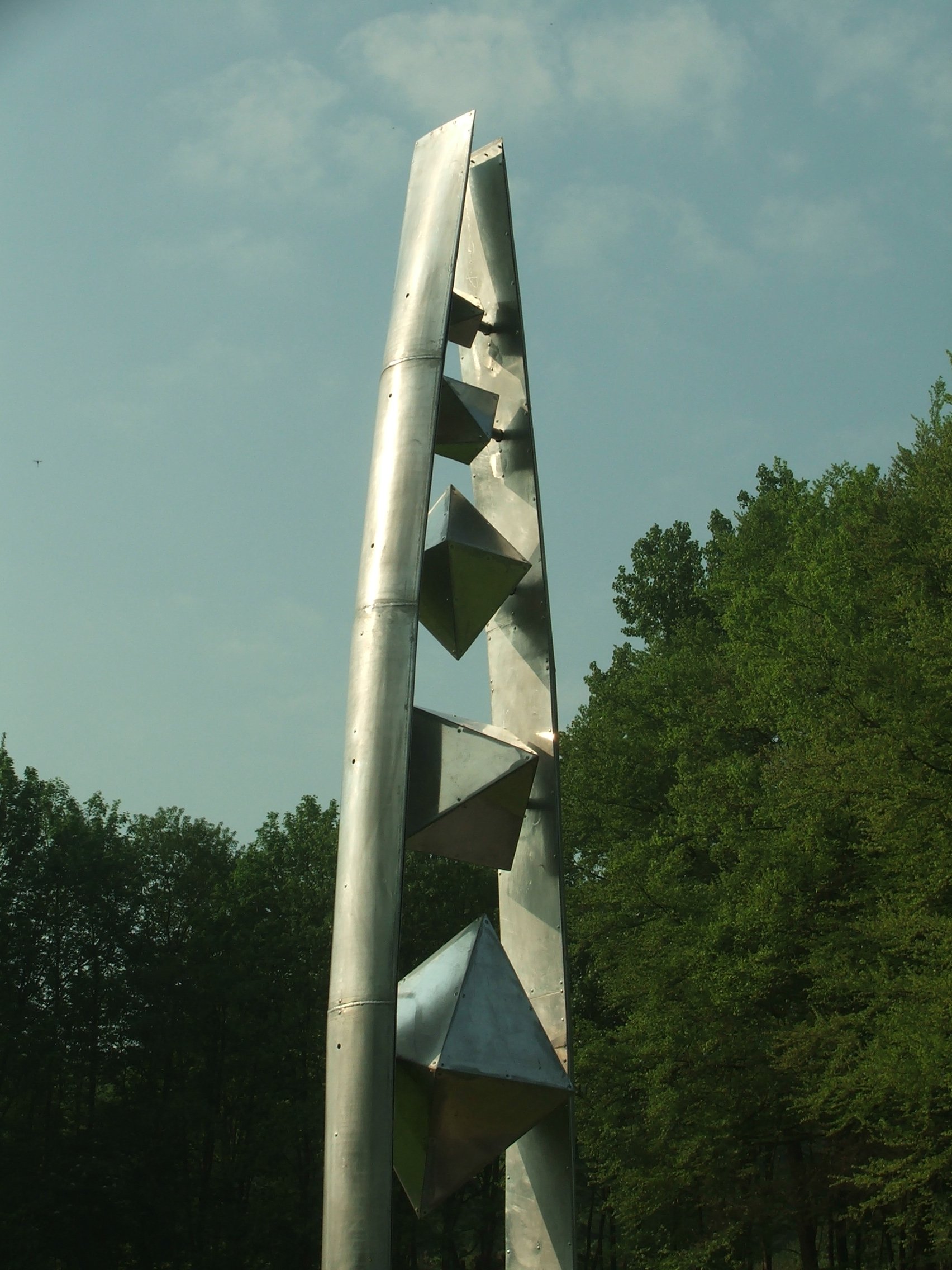
Hommage à Brancusi – Monumental Magnetic Kinetic Sculpture (2006)
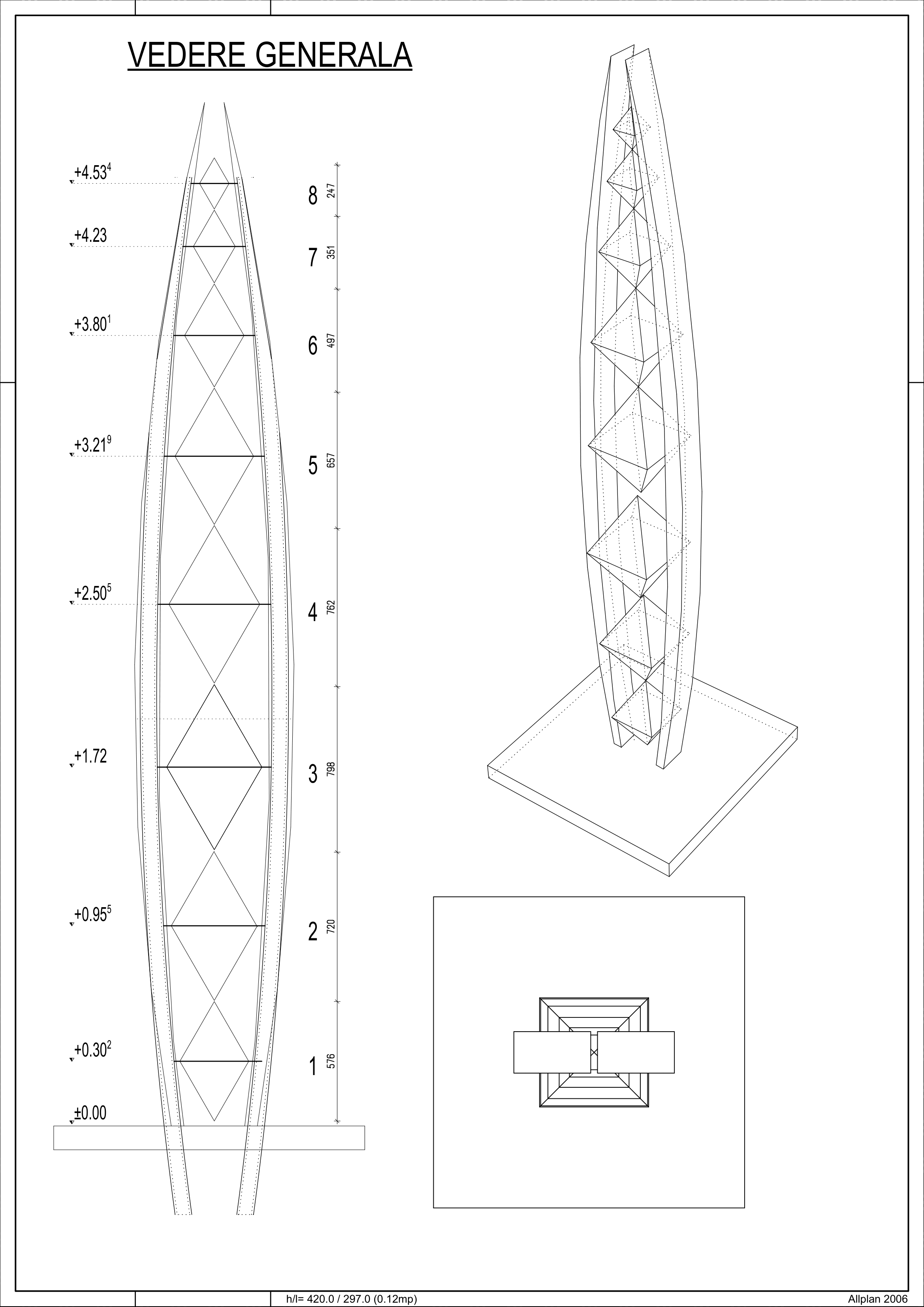
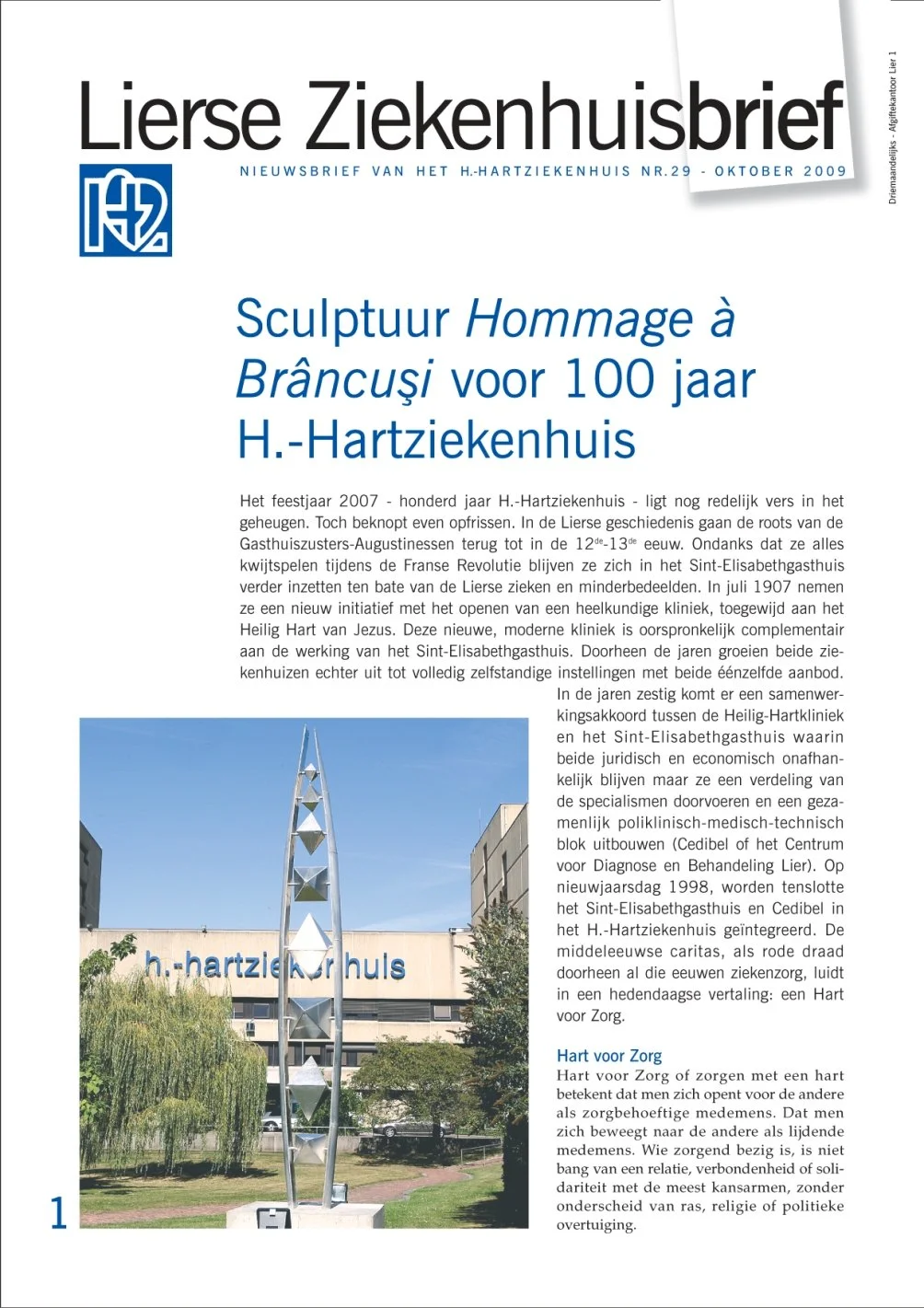
A defining milestone of my artistic career is Hommage à Brancusi, a monumental magnetic kinetic sculpture that earned me the title Sculptor of the Year in Belgium in 2006. The work stands permanently installed in front of the city hospital of Lier, Belgium, where it functions as both a public landmark and a contemplative spatial presence.
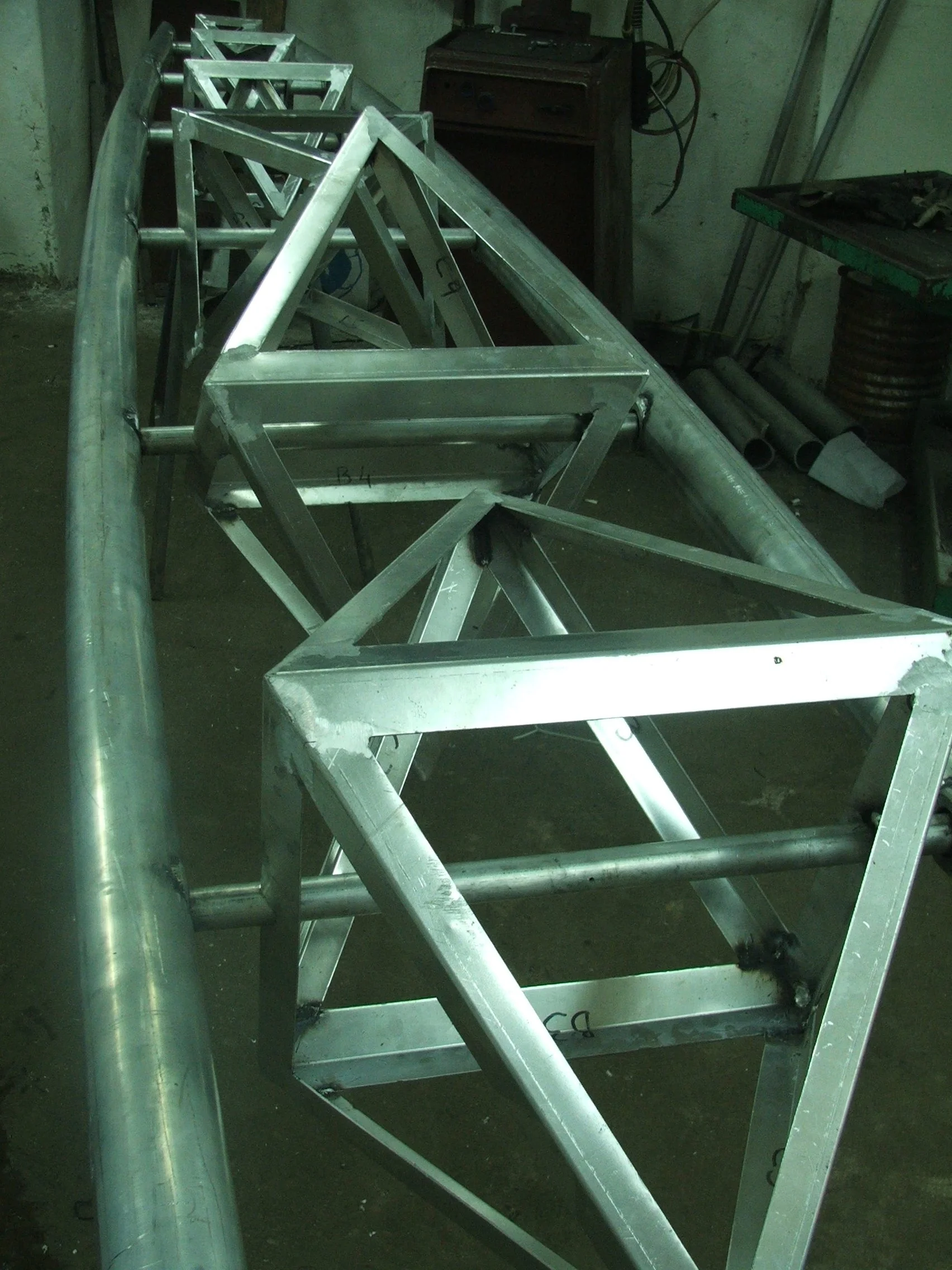
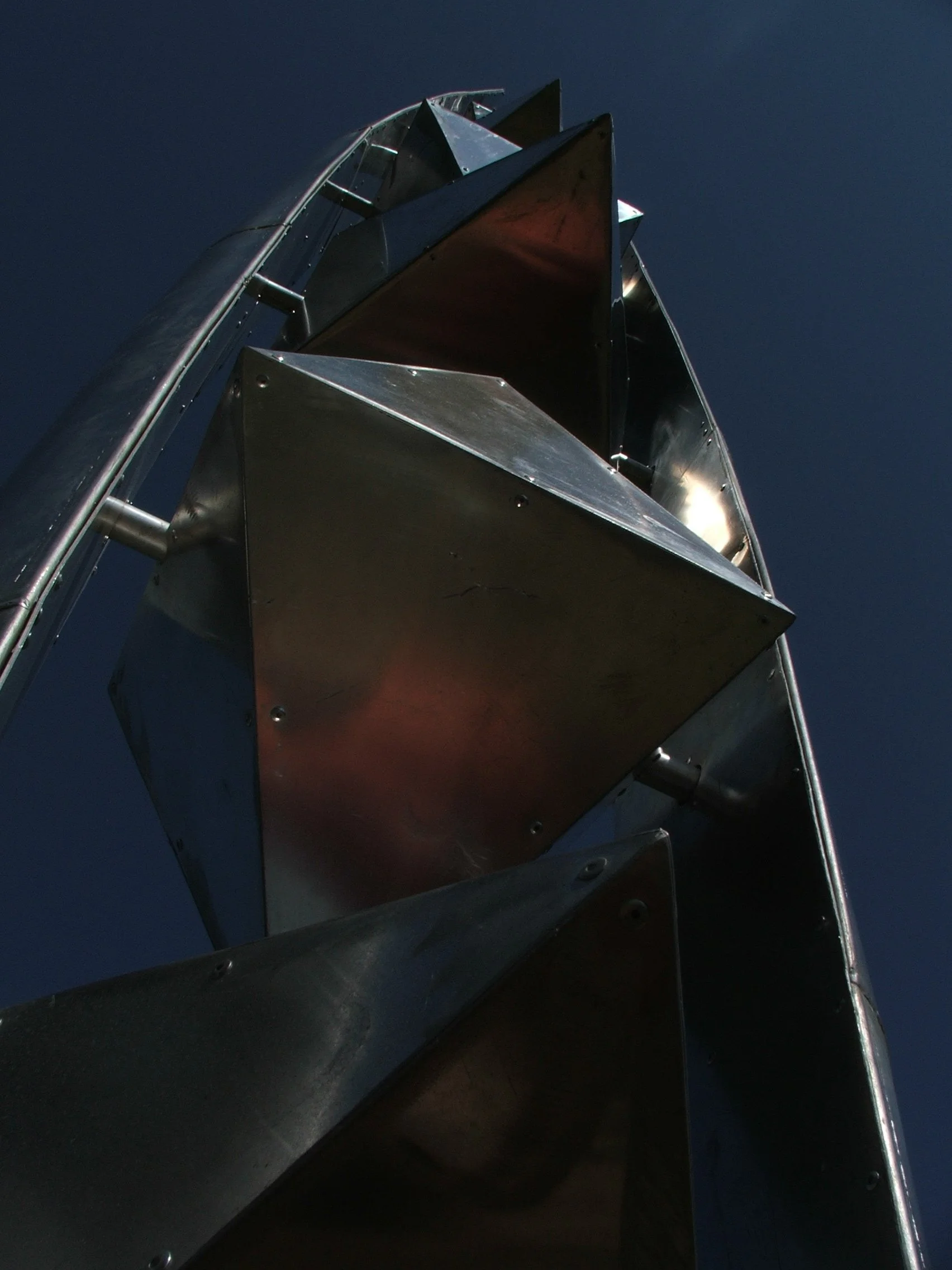
Rising to a height of eight meters, the sculpture is constructed from durable aluminum, achieving an exceptional balance between structural stability and visual lightness. Despite its monumental scale, the composition appears almost weightless — as light and subtle as a breath of wind. The verticality and refined formal language directly reference the spiritual purity and essential forms of Constantin Brâncuși, while the kinetic and magnetic principles introduce a distinctly contemporary sculptural logic.
At the core of the work lies a hidden magnetic system, embedded within the interior of the sculptural forms. The magnets are positioned in positive-to-positive repulsive alignment, so that as the elements approach one another, magnetic resistance gently forces them apart. This interaction generates a continuous oscillation, producing a state of perpetual motion without mechanical contact, friction, or visible propulsion.
The result is a subtle, ever-changing kinetic choreography, where the sculpture responds to air currents and environmental micro-forces, transforming even the slightest movement into a slow, meditative spatial event. This delicate interplay between material, energy, and motion creates the sensation of a self-sustaining dynamic equilibrium, an almost silent form of perpetual motion that evokes both technological precision and organic vitality.
Conceptually, Hommage à Brancusi bridges early modernist abstraction and contemporary kinetic experimentation. The sculpture translates Brâncuși’s pursuit of spiritual essence into a new dimensional language of magnetic energy, levitation, and temporal transformation. It stands as a synthesis of sculpture, engineering, and metaphysical reflection — a work where form dissolves into movement, and mass into resonance.
In the context of public space, the sculpture functions as a vertical axis of contemplation, offering viewers a continuously unfolding visual experience that transcends static perception. Its presence transforms the surrounding architectural environment into a field of slow motion and introspective calm.